
Checking Criminal History in Madison County
Begin with Madison County's CiviTek Online Court Records Search when the goal is a filed criminal case. OCRS offers a Public choice for anonymous access, while attorney, registered-user, and party access require credentials. Search both Circuit Court and County Court because felonies and misdemeanors use different court levels.
Have the full legal name, likely spelling variants, date of birth when available, and an approximate filing or arrest date. A matching name is a lead, not proof of identity. Compare the docket with the underlying arrest agency, jail record, and FDLE history when accuracy matters.
- Choose Public on Madison OCRS and select the correct court context.
- Search by name, then narrow with date and case details.
- Open the docket and compare charges, status, and disposition.
- Ask the creating police agency or MCSO for the incident report, and call the jail for current custody.
- Request a certified disposition from the Clerk or an official Florida history from FDLE when needed.
Madison County's Three Records Buildings
Three Madison addresses answer three different questions. The Madison County Courthouse, 125 SW Range Avenue, holds Circuit and County Court files. The Sheriff's Office at 2364 West US 90 houses administration and Public Records/Warrants. The Madison County Jail at 823 SW Pinckney Street handles booking and immediate custody questions.
The official Madison County Clerk site shows the local court office that anchors criminal case record access.
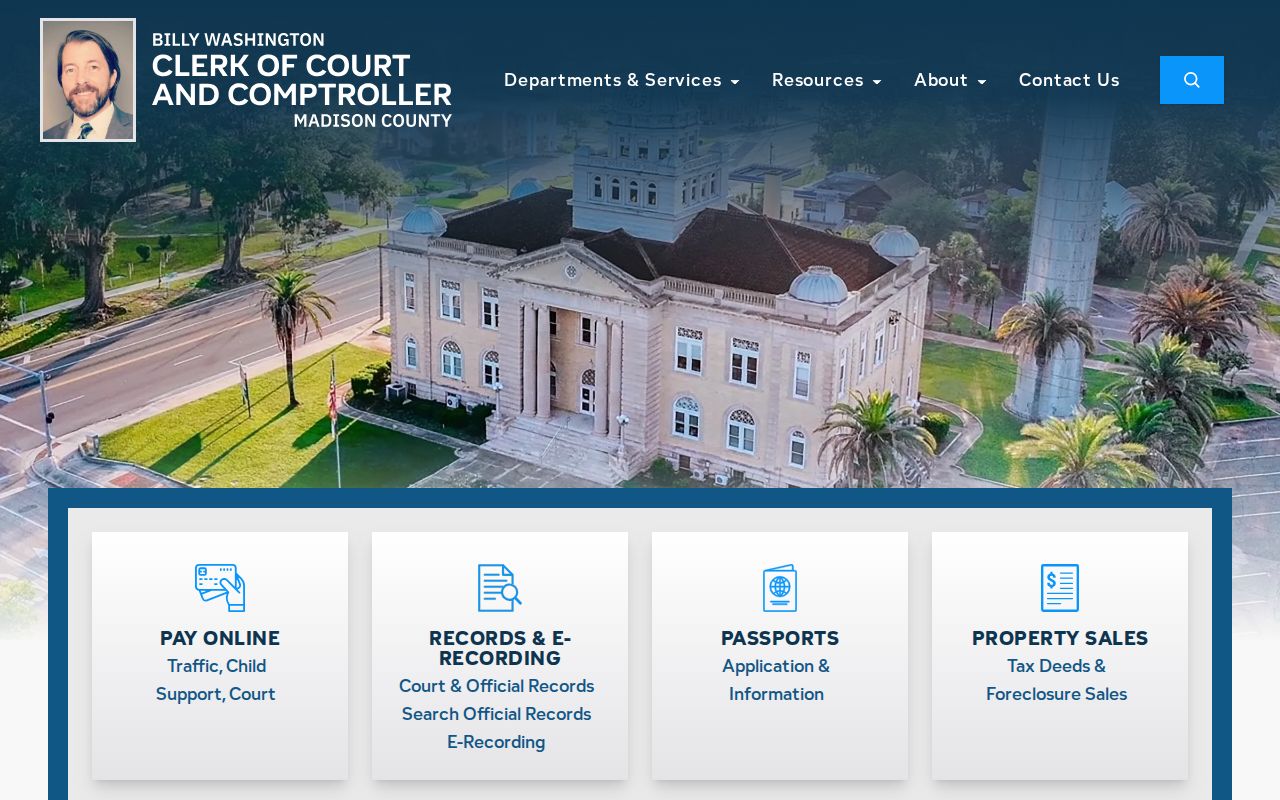
This source is the right starting point for office hours, court services, certified dispositions, and current Clerk contact information.
Clerk of Court
850-973-1500, weekdays 8:00 a.m. to 4:30 p.m.
Sheriff Records
850-973-4151, weekdays 8:00 a.m. to 5:00 p.m.
County Jail
850-973-4002 for current custody and booking questions.
Sending a court-copy request to county administration or a booking question to the courthouse slows the search. Call first because Madison County spans a wide rural area and archived files may need advance retrieval.
Florida Official Background Checks
The Florida Department of Law Enforcement offers a public name-based Florida history search for $24. Instant results are not certified. A separate certified or non-certified channel applies when staff processing or certification is needed.
FDLE's free Personal Review is for someone checking their own record. It requires fingerprints taken by a law-enforcement or criminal-justice agency and mailed with the form. No approved commercial LiveScan site inside Madison County was verified, so call MCSO at 850-973-4151 about availability, identification, scheduling, and any local rolling fee.
The FDLE Florida Checks page identifies the official products used for statewide Madison County criminal-history research.
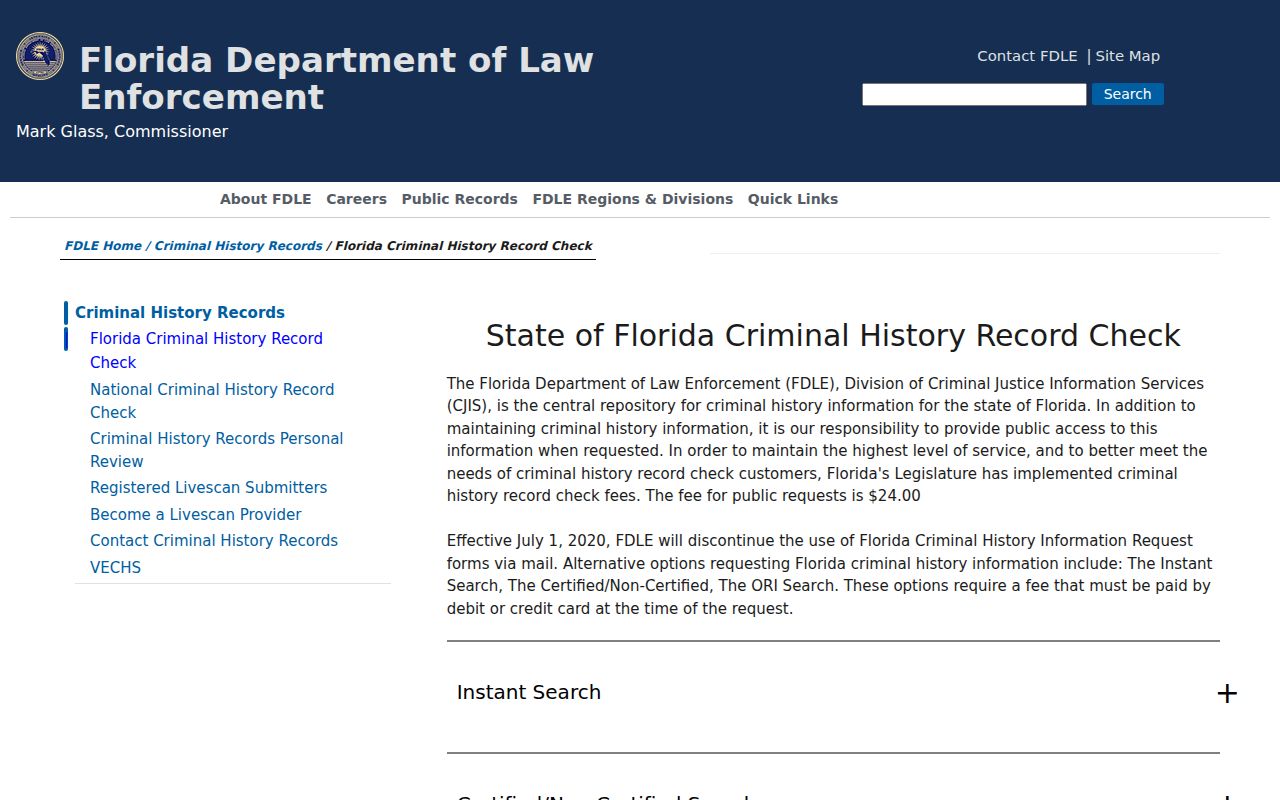
The page separates the instant option from staff-processed certified and non-certified searches, which prevents readers from treating every result as a certified document.
Madison County FDLE Record Review
The paid FDLE name search and free fingerprint personal review serve different aims. A name search is a Florida-only match of data reported to FDLE and may confuse people with similar names. The personal review uses fingerprints to let the subject inspect and challenge their own repository history.
FDLE publishes the Personal Review and correction route for a person auditing their own Madison County criminal record.
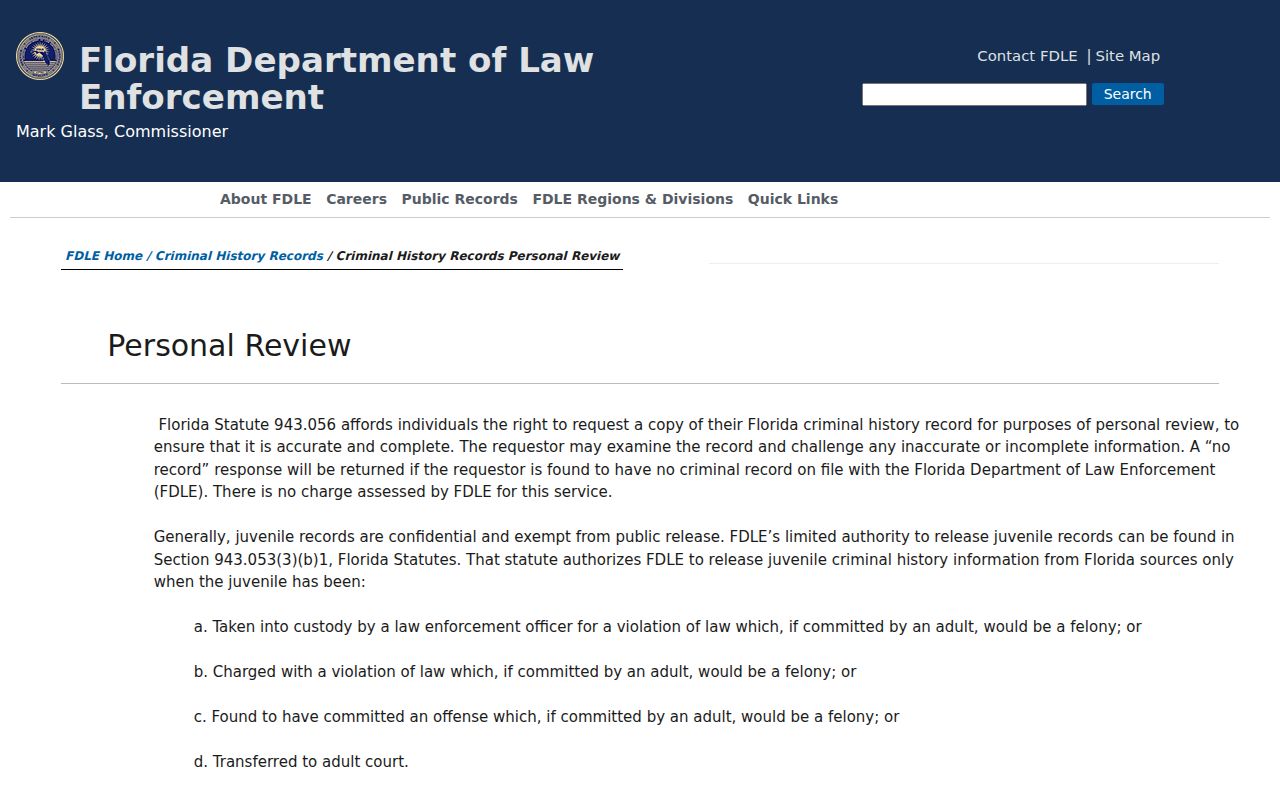
Fingerprint identification makes this channel more reliable for self-review than a name match, and it provides the formal path for challenging missing or inaccurate information.
| Route | Best use | Cost and method |
|---|---|---|
| FDLE Instant Search | Public Florida name search | $24 online by card |
| Certified/Non-Certified | Staff-processed result | Use FDLE product instructions |
| Personal Review | Review or correct your own record | Free, fingerprints and mail |
An ORI-based fingerprint check is routed by the ORI supplied by the requesting authority. Confirm that code before fingerprints are submitted.
Criminal Record Types
A Madison County criminal history can refer to several records created at different stages. An incident report describes an agency response. A booking entry proves jail intake, while a court file shows the prosecution and outcome. FDLE compiles reported Florida arrest and disposition events.
Warrant information may sit with the MCSO Public Records/Warrants function or in a court docket. FDC covers sentenced state offenders and adult felony supervision. FDLE operates the public sexual offender and predator registry.
- Arrest and booking records show intake, charges, bond, holds, and release data.
- Criminal court files show filed charges, hearings, pleas, dispositions, and sentences.
- FDLE histories connect reported Florida arrest cycles with reported outcomes.
- Warrants require verification with MCSO or the issuing court.
- Supervision and registry records come from FDC, FCOR, courts, and FDLE.
No Madison County Jail Record Roster
No official online inmate roster was found for the Madison County Jail. For immediate custody, call the jail at 850-973-4002. For a releasable booking record not displayed online, submit a focused request to the MCSO Public Records Custodian with the name, approximate booking date, and requested fields.
The official FDC Offender Search is a separate state system that can add sentenced-offender and supervision context to Madison County record research.
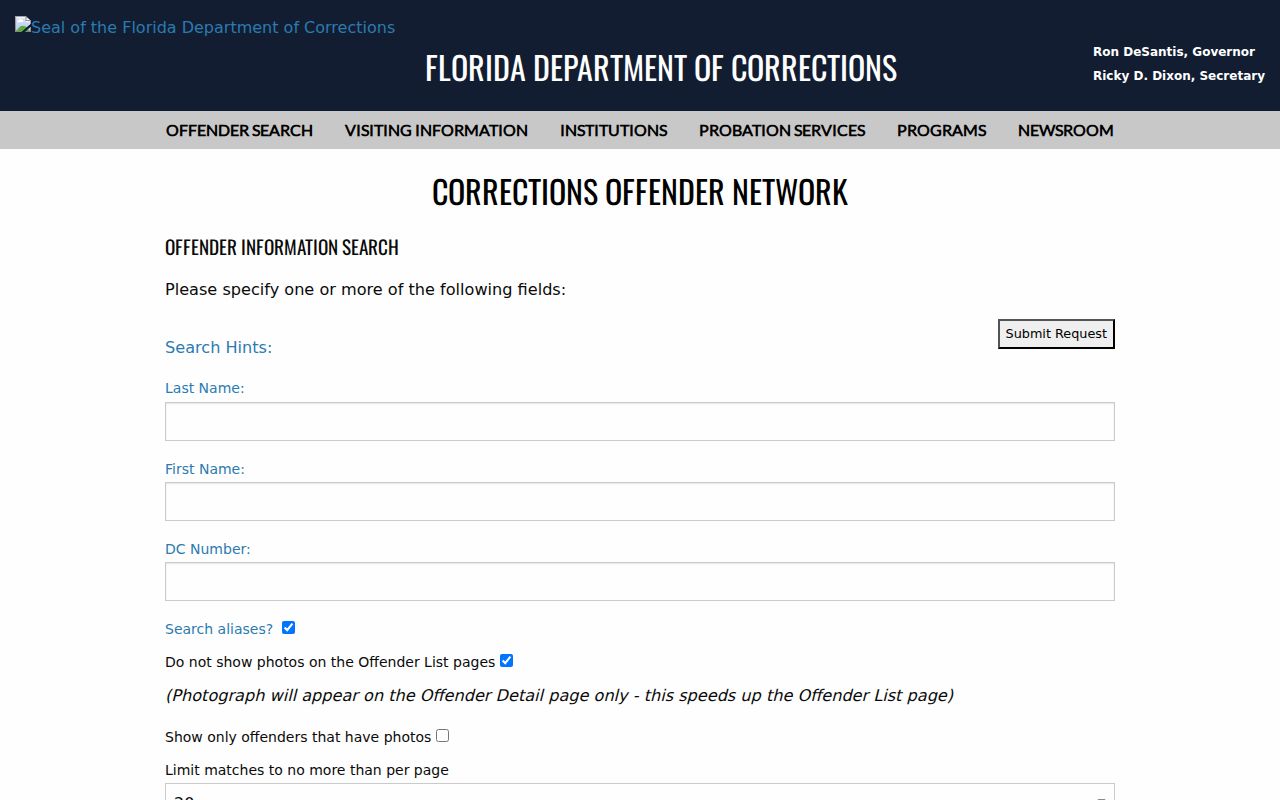
Its name and DC-number fields do not replace a call to the Madison County Jail for a recent booking or a person still in local pretrial custody.
Do not substitute FDC Offender Search for the county jail. FDC covers qualifying state custody and supervision, while a person awaiting a Madison court hearing may remain in county custody. VINELink can supplement status notification, but the jail remains the authoritative local source.
Inside a Madison County Criminal Record
The fields depend on the source. A Madison court docket may show case number, court level, party name, charges, statute citations, events, disposition, sentence, and financial assessments. Booking and FDLE records use related but distinct identifiers.
| Name & Identifiers | Name, aliases, birth information, case number, and agency identifiers where public. |
|---|---|
| Arrest / Booking Data | Agency, booking time, intake charges, bond, holds, and release information. |
| Charges & Statutes | Original arrest allegations and charges later filed by the State Attorney. |
| Disposition | Dismissal, acquittal, plea, conviction, or withhold of adjudication. |
| Sentence | Custody, probation, fines, costs, and other terms shown in the court file. |
| Custody / Supervision Status | County jail, FDC custody, community supervision, or release status when public. |
How Madison Records Reach FDLE
An arresting agency first creates the report. Jail staff then create the booking entry, fingerprints, photograph, property inventory, intake charges, and identifying links. Fingerprint and arrest data sent to FDLE form an arrest cycle, but that cycle is not a conviction.
The State Attorney decides what to file. The Clerk records hearings, pleas, outcomes, and sentences, and reported dispositions can later connect to the FDLE arrest cycle. Timing and unmatched data explain why the jail, court, and repository may disagree temporarily.
Inside Madison County OCRS Access
The official Madison OCRS gateway shows four access choices before a user reaches case data. The Public option is the appropriate anonymous starting point. Attorney, Registered User, and Party Access choices are credentialed and should not be mistaken for broader public search modes.
The gateway is county-specific and preselects Madison County as county 40. Search results can expose court type, case number, filing details, party names, charges or counts, events, disposition, sentence data, and financial information where public. Some document images or protected fields may be unavailable to anonymous users.
| Gateway choice | Access | Use |
|---|---|---|
| Public | Anonymous | Begin a public Madison County case search |
| Attorney | Credentials | Authorized attorney access |
| Registered User | Credentials | Account-based access under applicable rules |
| Party Access | Credentials | Authorized access tied to a case |
If OCRS does not show an older document, final disposition, or certified copy, call the Clerk at 850-973-1500. The live gateway is more reliable than old vendor screenshots because the Clerk posted current court-record notices in June 2025.
Public Access Laws in Florida
Florida's Constitution and Chapter 119 generally support access to nonexempt government records. Access does not erase exemptions for sealed, expunged, juvenile, victim, investigative, or protected identifying material. Agencies may redact exempt portions and charge lawful copy or extensive-use costs.
Key Statutes:
Florida Statutes Chapter 119 explains public-record access and exemptions.
Florida Statutes § 943.053 governs dissemination of criminal-justice information.
Florida Statutes § 943.056 provides personal review and challenge rights.
Florida Statutes § 943.0595 addresses automatic sealing and related court-record confidentiality.
Madison County Reports Follow Their Creator
MCSO, Madison Police, FHP, and other agencies can all generate records tied to a Madison County event. The agency whose officer wrote the report usually keeps it. Dispatch involvement does not prove MCSO owns the report because county communications dispatches both city and county responders.
For MCSO material, provide an incident number, date, time, exact location, report type, and desired format to sheriff@mcso-fl.org. Madison Police requests route through City Clerk and Public Records Custodian Lee Anne Hall at City Hall. Highway incidents may belong to FHP, even if the person was booked at the Madison County Jail.
Sealed, Expunged, and Restricted Records
Florida uses court-ordered sealing and court-ordered expunction, plus automatic sealing for qualifying outcomes and specialized processes. Eligibility depends on the outcome, criminal history, offense, and statutory route. Section 943.0584 lists offenses that can make court-ordered relief unavailable.
Begin with the Madison County Clerk for the local case file and current filing instructions. FDLE certification is part of many court-ordered applications. A sealed or expunged record is not the same as a case that never existed, and authorized agencies may retain access where Florida law permits.
The Clerk's official records page connects Madison County criminal case readers with court-record and sealing or expunction resources.
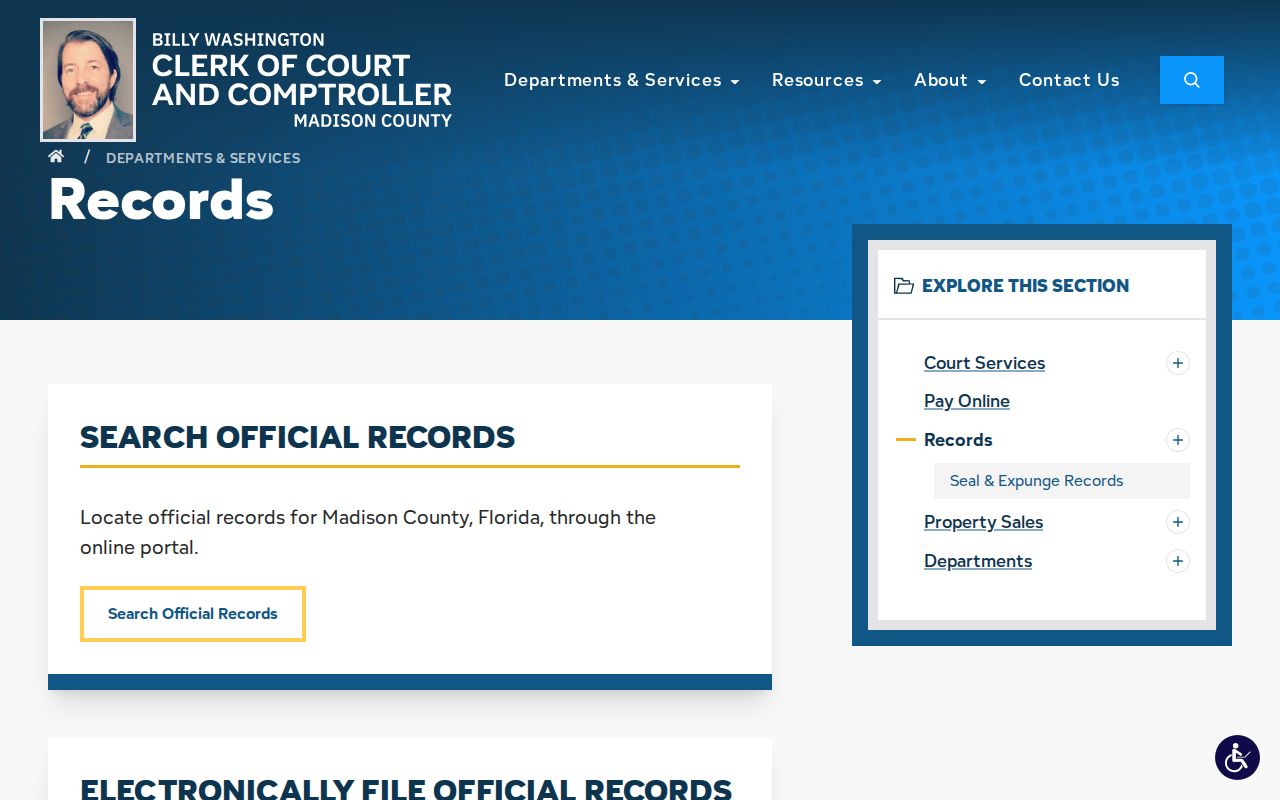
Use the current Clerk page for local filing direction, then confirm statewide certificate requirements and eligibility through FDLE and the governing Florida statutes.
Dismissed Madison County Case Records
A dismissal does not always vanish from OCRS or FDLE at once. Compare the docket outcome, the repository entry, and the current version of section 943.0595. The 2025 law expressly connects FDLE's sealing notice with confidentiality of the related court record for qualifying automatic-sealing cases.
The current Florida automatic-sealing statute is the controlling source for deciding whether a qualifying Madison County outcome enters that process.
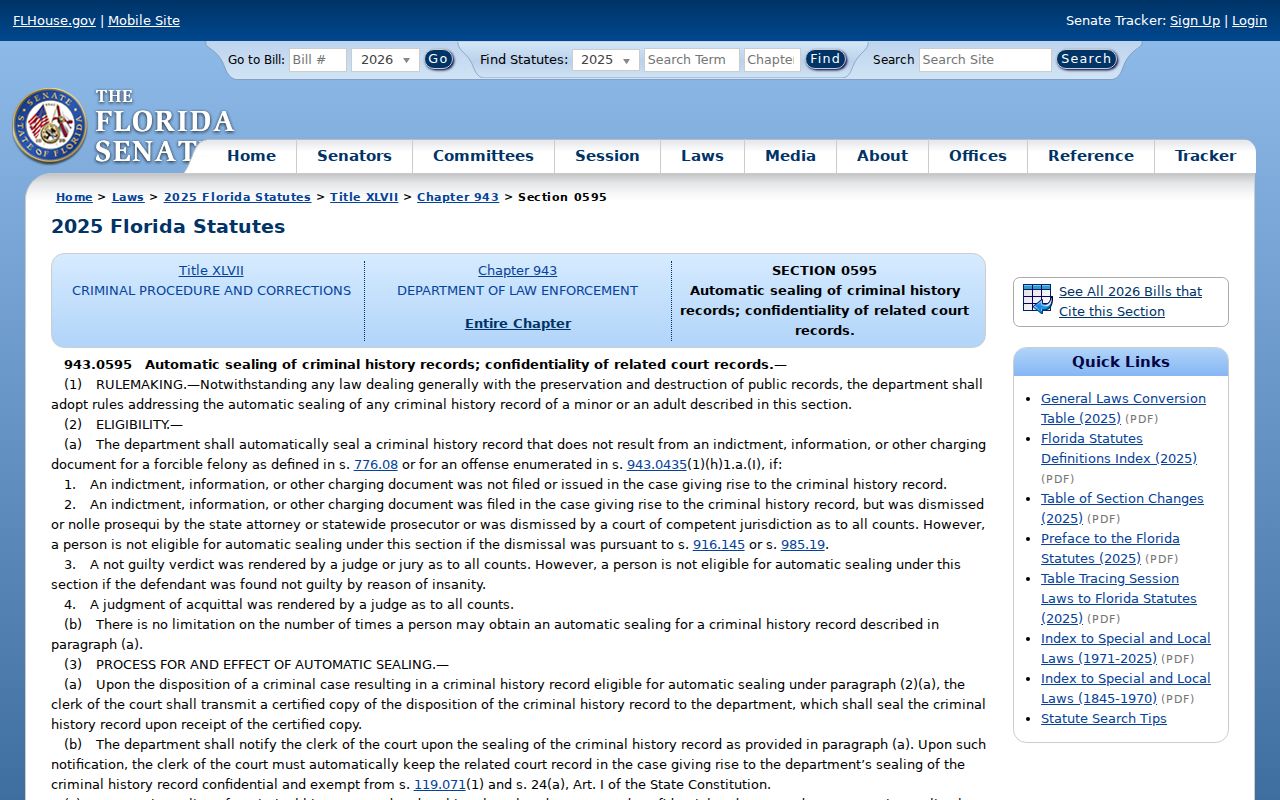
The statutory text matters because dismissal alone does not prove that a public court record has already become confidential or that every related agency record has changed.
If your own FDLE history lacks a disposition or links the wrong event, use the free fingerprint Personal Review and challenge process. For a missing or unclear Madison disposition, contact Clerk Billy Washington's office with the case number and ask about a certified copy.
Madison County Warrants Need Verification
No official public online Madison County warrant search was verified. The practical local route is the Public Records/Warrants function at sheriff headquarters. Call 850-973-4151 or non-emergency dispatch at 850-973-4001 ext. 1. A bench warrant issued in a criminal case may also appear through the Clerk's docket, but online silence is not proof that no warrant exists.
Do not try to resolve a suspected warrant by arriving without instructions. Ask the agency or court how to confirm identity, issuing authority, case number, bond or hold information, and the correct next step. Urgent safety matters belong with 911, not a records request.
A sheriff report and a court warrant are related but distinct records. The arresting agency documents enforcement, while the issuing court maintains the judicial file. That distinction also explains why a warrant, later arrest, jail booking, and filed charge can carry different dates and labels.
Madison County Criminal Records by City
Madison County has three incorporated places: Madison, Greenville, and Lee. The 2020 Census counts were 2,912, 746, and 352. City administrative records do not replace law-enforcement reports. Identify the responding agency first, then follow any booking to the county jail and any prosecution to the Madison Clerk and OCRS.
Madison Criminal Records
2,912 · City custodian routes Madison Police reports; county systems hold bookings and cases.
Greenville Criminal Records
746 · Confirm the responding agency with city government or MCSO.
Lee Criminal Records
352 · Town records and MCSO law-enforcement records use separate custodians.
Madison County Records Across 716 Square Miles
The sheriff describes a 716-square-mile county serving about 18,733 residents. Courthouse, sheriff, jail, and statewide routes therefore matter to readers in Madison, Greenville, Lee, and unincorporated areas. A phone call before travel can confirm the correct counter, hours, copy estimate, and whether an older file needs retrieval.
The FDC Community Corrections page supplies the statewide supervision layer for Madison County adult felony record questions.
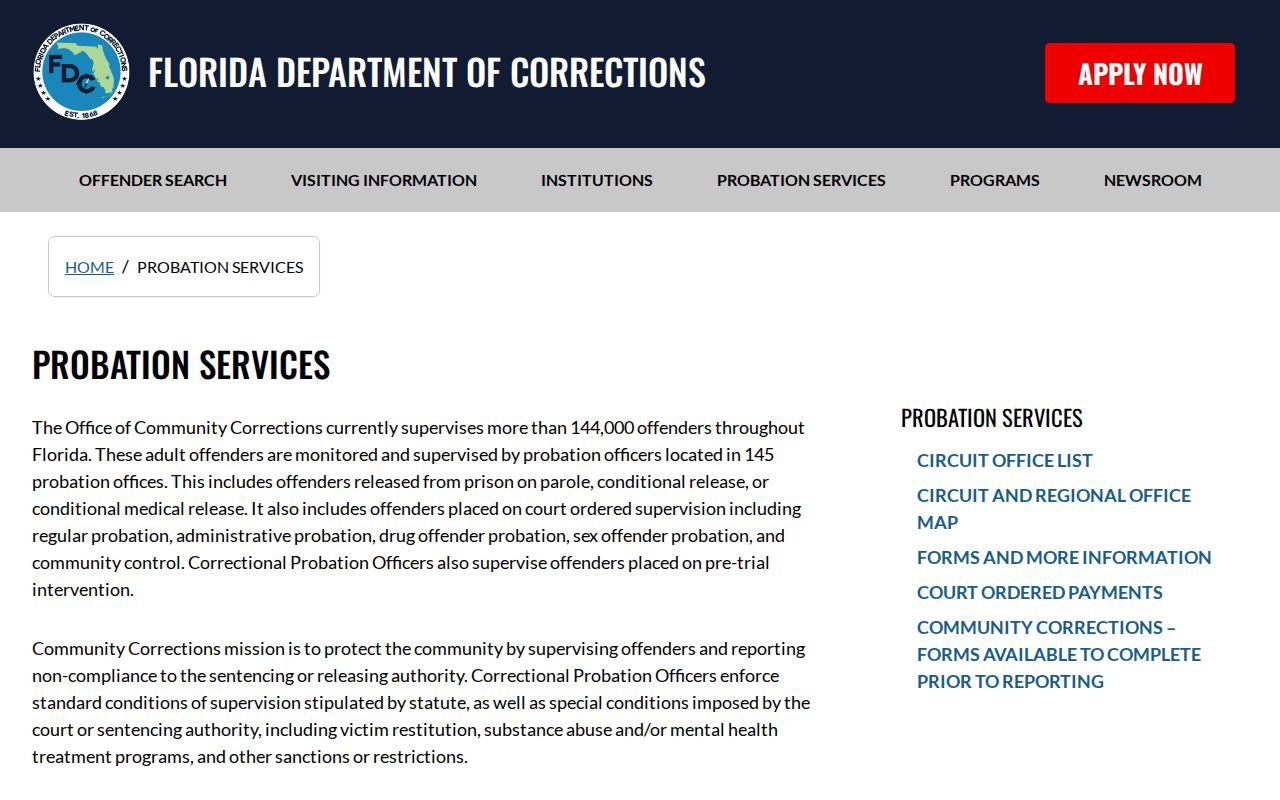
Court dockets show the sentence and violation filings, while FDC may show covered supervision status; detailed officer notes and safety-sensitive information are not automatically public.
MCSO reports about 85 employees, including 39 law-enforcement, 27 detention, 12 communications, and five administrative staff. Public Records/Warrants sits within the administrative division, so a focused request with an incident or case number helps a small office locate the correct material.
Madison County Custody Record Differences
The FDC Offender Search covers sentenced state offenders and supervision records within its scope. The Madison County Jail covers local custody and pretrial detention. Search FDC by name or DC number, but call the jail when the issue is a recent Madison booking.
- County booking
- Local intake after an arrest, not a finding of guilt.
- Court disposition
- The recorded outcome of the filed prosecution.
- Withhold adjudication
- A Florida outcome that must be read from the specific docket and order, not described as a conviction without checking.
- Community supervision
- Adult felony supervision generally administered through FDC Community Corrections.
The Florida Commission on Offender Review is the official authority to consult when a Madison County record raises a parole or commission-supervised release question.
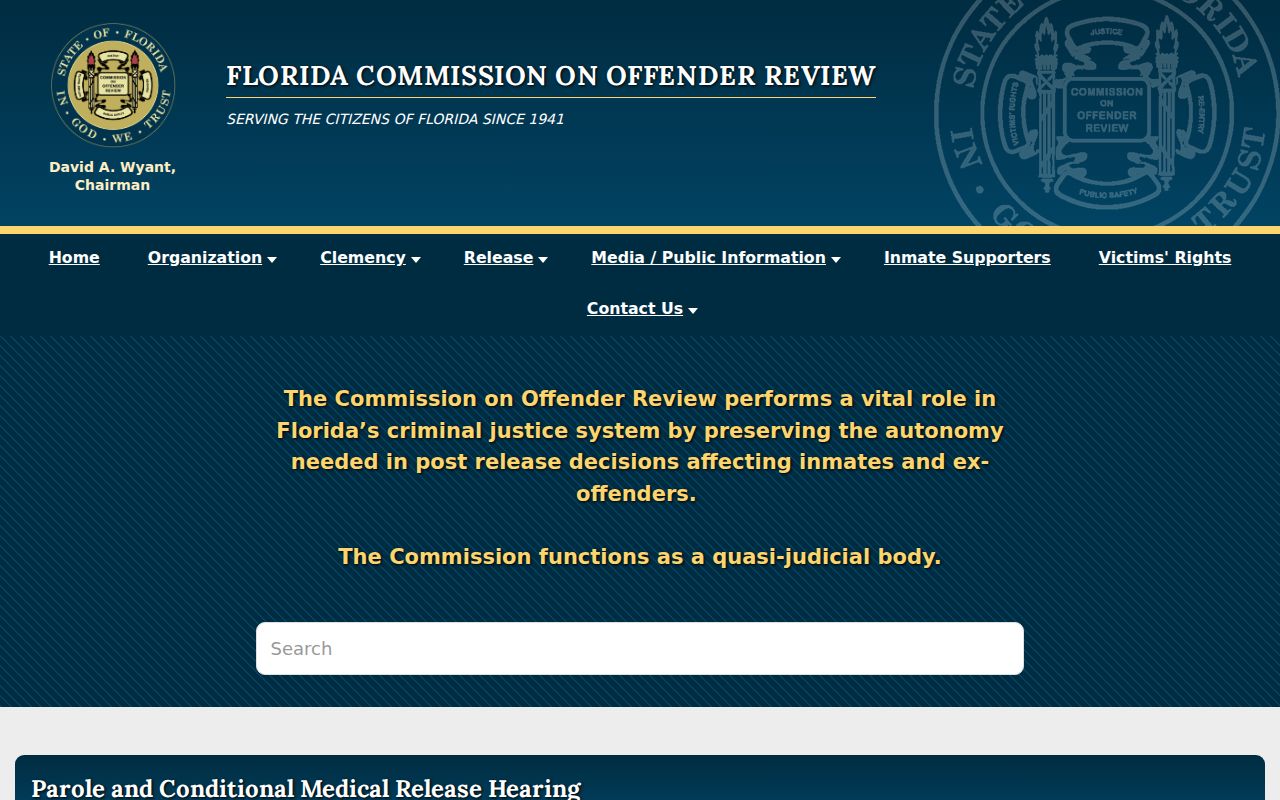
Its role is distinct from the county jail, the sentencing court, and FDC field supervision, so the offense date and sentence must be checked before assuming parole applies.
Florida Commission on Offender Review handles parole and related functions within its authority. Parole eligibility often depends on offense date because Florida largely abolished parole for newer offenses.